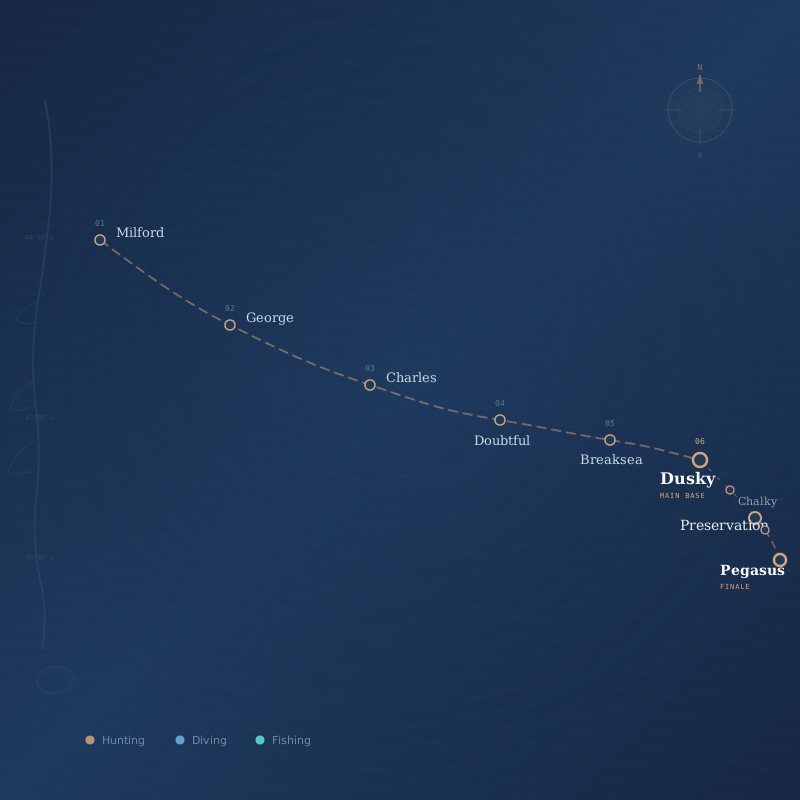
Here's our likely schedule for Fiordland and Stewart Island.
Expedition Plan — Season 2026
Fiordland & Stewart Island: Hunting, Diving & Fishing Aboard Matariki III
9 weeks through New Zealand's wildest coastline — Milford Sound to Stewart Island
Milford→
George→
Charles→
Doubtful→
Breaksea→
Dusky→
Chalky→
Preservation→
Paterson Inlet→
Port Pegasus
The plan is simple: arrive at Milford Sound in late February, then work south through every major fiord to Preservation Inlet, timing the journey so we hit the deepest, most remote country just as the red deer roar reaches full intensity in late March. Then cross Foveaux Strait to Stewart Island for two weeks of whitetail hunting, world-class paua and crayfish diving, and some of the best blue cod fishing in the country.
Every stop is assessed for three things — deer hunting, paua and crayfish diving, and fishing — because this trip has to deliver on all three. The further south we push, the better it gets.
Hunting
Diving
Fishing
Fiordland — 7 Weeks
01
Milford Sound Piopiotahi
Resupply and staging point. Not a hunting stop — steep terrain and heavy tourist traffic. If the weather's calm on arrival, the Dale Point and St Anne Point reefs are worth a dive for crayfish before heading south. Don't linger.
02
George Sound Kaipo
HUNTING FOCUS The George River flats are the best open hunting country between Milford and Doubtful — genuine glassing and stalking terrain. Pre-roar, so expect dawn and dusk feeding on the flats with stags still in velvet. Moderate hunting pressure from track access. Diving is outer coast only and weather-dependent. Sandflies are biblical.
03
Charles Sound Te Rā
HUNTING FOCUS Less hunting pressure than George — boat access only means the deer are less educated. Emelius Arm has workable river flats and bush-edge hunting. The Nancy Sound passage makes a good combo hunt-and-fish day by tender. Multiple arms give options when weather shifts. Diving is weak — outer coast only with an exposed entrance.
04
Doubtful Sound Patea
DIVING FOCUS The diving highlight of the northern fiords. The massive freshwater discharge from the Manapouri tailrace creates a deep water emergence effect — black coral, brachiopods, and tube anemones at diveable depths. The Shelter Islands and Nee Islets partially break the swell, making this the most reliable crayfish diving north of Breaksea. Hunting is the weakest of the major fiords due to steep terrain, but Secretary Island's eastern side and Crooked Arm produce deer.
05
Breaksea Sound Te Puaitaha
The first genuine all-rounder on the route. Less freshwater input than most fiords means better salinity at the entrance — and better conditions for paua and crayfish. The entrance island reef systems are some of the most extensive and productive fishing structure in Fiordland. The roar is building now. Good deer numbers in the Wet Jacket Arm valleys with less hunting pressure than the northern fiords.
06
Dusky Sound Tamatea
MAIN BASE This is where everything comes together. Arriving as the roar kicks off, with multiple river flat systems — Supper Cove, Luncheon Cove, the Seaforth flats — all accessible by tender for classic stag hunting. Resolution Island and Five Fingers Peninsula create a layered dive system that works in any weather: outer coast for big crayfish and paua on calm days, Cascade Cove on moderate days, Acheron Passage when it's blown out. The fishing around Five Fingers and the entrance reefs is the best on the Fiordland coast. Enough anchorages to move with the weather. Plan to spend the most time here.
07
Chalky Inlet Te Houhou
The roar is in full swing. Good deer with light pressure around North Port and the inner bays — wapiti range is nearby, so wapiti-cross animals are possible. Entrance headland reefs hold reliable crayfish on calm days. A solid stepping stone between Dusky and Preservation.
08
Preservation Inlet Rakituma
FIORDLAND FINALE The best paua and crayfish diving on the Fiordland coast — the Puysegur Point reef systems are fully oceanic, remote, and virtually undived. Big crayfish and the best paua density on the coast. Peak roar with total isolation: virtually zero other hunters, and the open coastal bush gives the easiest stalking terrain of any fiord. Coal Island and the inlet entrance headlands provide layered dive options for rougher days. Kisbee Bay is a superb base anchorage. Extend here if weather delivers calm windows for the Puysegur reefs.
Foveaux Strait crossing — ~60 NM to Stewart Island
Stewart Island / Rakiura — 2 Weeks
09
Paterson Inlet Whaka ā Te Wera
NEW SPECIES A different world after Fiordland. Resupply at Halfmoon Bay, then base in the vast sheltered waters of Paterson Inlet. This is whitetail deer country — a completely different hunt to the red deer roar. Still-hunt the coastal bush edges and small clearings from the tender. The paua and crayfish diving steps up immediately — cleaner oceanic water, better reef habitat, and legal-sized paua are far more common than in the fiords. Blue cod fishing is outstanding throughout the inlet and on the outer reefs. Multiple sheltered anchorages in the inner arms — Prices Inlet, Kaipipi Bay, and Native Island area.
10
Port Pegasus Piki Hatiti
EXPEDITION FINALE The most remote anchorage in New Zealand. Port Pegasus is a vast natural harbour on Stewart Island's southern coast — almost nobody goes here by yacht. The whitetail hunting is the best in the country: virtually unhunted coastal bush with deer feeding on the shoreline at dawn and dusk. The diving is exceptional — fully oceanic reefs with big crayfish and dense paua populations on the outer coast and around the harbour entrance. Blue cod are enormous and abundant. The harbour itself is well-sheltered with multiple anchorage options in the inner arms — North Arm, South Arm, and behind the islands. This is where the entire expedition reaches its crescendo: the most remote, the most productive, and the most unforgettable.